



Businesses that depend on cars, vans, pickups, or trucks face risks every day. A driver may cause an accident, a delivery van may be stolen, or a company vehicle may be damaged in bad weather. Managing separate insurance policies for every vehicle can also take a lot of time.
Fleet insurance offers a simpler solution. It allows a business to protect several vehicles under one commercial insurance policy. Depending on the coverage selected, it may help pay for liability claims, vehicle repairs, theft, medical expenses, and other covered losses.
This guide explains what fleet insurance is, what it covers, how much it costs, who needs it, and how businesses can find the right policy in the United States.
What Is Fleet Insurance?
Fleet insurance is a type of commercial auto insurance that covers multiple vehicles used by the same business.
Instead of buying and managing a separate policy for every car, van, or truck, a company may place several eligible vehicles under one fleet insurance policy. This can make renewals, paperwork, claims, and vehicle updates easier to manage.
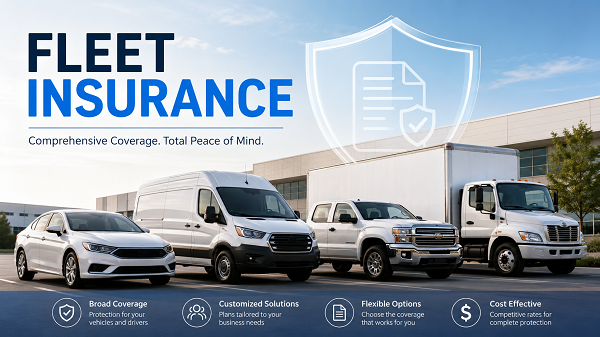
A fleet may include:
- Company cars
- Delivery vans
- Pickup trucks
- Service vehicles
- Box trucks
- Utility vehicles
- Commercial trucks
- Certain trailers
Fleet insurance is not completely separate from commercial auto insurance. It is usually a commercial auto policy designed to protect several business vehicles under one organized plan.
Personal auto insurance often does not provide proper protection when a vehicle is mainly used for work. Business auto insurance may also offer higher limits and protection for rental vehicles, employee-owned vehicles, large trucks, or vehicles used to transport goods and passengers.
How Many Vehicles Do You Need for Fleet Insurance?
There is no universal minimum number of vehicles required for fleet coverage.
Some insurance companies may offer business fleet insurance to companies with only a few vehicles. Other insurers may require a larger number before they treat the vehicles as a fleet.
Eligibility may depend on:
- Number of vehicles
- Types of vehicles
- Business activities
- Vehicle ownership
- Operating area
- Driver records
- Previous claims
A small plumbing company with three service vans may have different insurance options from a delivery company with 40 vehicles. Both businesses should ask insurers whether a fleet arrangement or individually scheduled commercial vehicles would be more suitable.
Who Needs Business Fleet Insurance?
Fleet coverage may be useful for businesses that own, lease, or regularly operate several vehicles.
Common examples include:
- Delivery and courier companies
- Construction contractors
- Landscaping businesses
- Plumbing and electrical companies
- Cleaning service providers
- Food distribution companies
- Real estate businesses
- Sales teams using company cars
- Taxi and transportation services
- Trucking and logistics companies
Company fleet insurance is not only for large corporations. A small business may also benefit when managing separate vehicle policies becomes difficult.
Businesses should also review coverage when employees use personal vehicles for work. For example, an employee may drive their own car to visit a client, pick up supplies, or make a delivery. A non-owned auto endorsement may be needed because the employee’s personal policy may not fully protect the company.
How Does a Fleet Insurance Policy Work?
To insure a fleet of vehicles, the business gives the insurance company information about its vehicles, drivers, and daily operations.
The insurer may ask for:
- Vehicle identification numbers
- Vehicle makes, models, and years
- Current vehicle values
- Annual mileage
- Business use
- Operating locations
- Driver names and ages
- License information
- Driving records
- Previous claims
The insurer reviews this information and calculates the premium based on the level of risk.
Once the policy starts, the company pays the agreed premium. If a covered accident or loss occurs, the business reports the claim to the insurer and provides the required documents.
A fleet policy may give the business one renewal date and a consistent set of liability limits. However, every vehicle does not always need identical protection. An expensive new truck may need collision and comprehensive coverage, while an older paid-off vehicle may need a different level of coverage.
What Does Fleet Insurance Cover?
The exact coverage depends on the policy, insurer, state, and business operations. Common options include the following.
Bodily Injury Liability
Bodily injury liability helps pay when a company driver causes an accident that injures another person.
It may cover:
- Medical expenses
- Lost income
- Legal defense costs
- Settlements
- Court judgments
A serious accident can create a large claim, so businesses should carefully choose liability limits instead of automatically buying the lowest available amount.
Property Damage Liability
Property damage liability helps pay for damage that a company driver causes to another person’s property.
This could include another car, a building, a fence, road equipment, or other physical property.
Most states require vehicle owners to carry liability insurance, but the minimum limits and rules vary by state.
Collision Coverage
Collision coverage helps repair or replace an insured vehicle after it is damaged in a crash.
For example, it may apply when a company van:
- Hits another vehicle
- Strikes a pole
- Hits a guardrail
- Rolls over
The business usually pays a deductible before the insurer pays the remaining covered amount.
Comprehensive Coverage
Comprehensive coverage protects against certain non-collision losses, such as:
- Theft
- Fire
- Vandalism
- Hail
- Flood damage
- Falling objects
- Broken glass
- Animal-related damage
Businesses financing or leasing vehicles may be required by the lender or leasing company to carry collision and comprehensive coverage.
Uninsured and Underinsured Motorist Coverage
This protection may help when a company driver is involved in an accident caused by someone who has no insurance or not enough insurance.
Requirements and availability vary by state.
Medical Payments or Personal Injury Protection
Medical payments coverage may help pay medical bills for the driver and passengers after a covered accident.
Personal injury protection may provide broader benefits, depending on state law. It can sometimes help with medical expenses, lost income, and other accident-related costs.
Hired and Non-Owned Auto Coverage
Hired auto coverage may protect vehicles that the company rents or leases temporarily.
Non-owned auto coverage may help protect the business when an employee uses a personal vehicle for company work.
These coverages are important for businesses that regularly rent vehicles or ask employees to use their own cars.
What Is Not Covered?
A fleet insurance policy does not cover every possible loss.
Common exclusions may include:
- Intentional damage
- Normal wear and tear
- Mechanical breakdown
- Unauthorized drivers
- Illegal activities
- Undeclared business use
- Personal use not allowed by the policy
- Claims above the policy limit
- Tools or cargo without separate coverage
For example, if expensive equipment is stolen from a service van, the auto policy may cover damage to the van but not the tools inside it. The business may need equipment, inland marine, or cargo coverage.
Always read the exclusions and endorsements before buying a policy.
How Much Does Fleet Insurance Cost?
There is no fixed price for motor fleet insurance. The premium depends on the company’s vehicles, drivers, location, operations, and claims history.
The main pricing factors include:
Number and Type of Vehicles
A fleet of passenger cars will usually have a different risk level from a fleet of heavy trucks or delivery vans. Vehicle size, repair cost, value, and purpose all affect pricing.
How the Vehicles Are Used
A local contractor driving within one city may pay a different rate from a delivery company traveling across several states.
Vehicles that spend more time on the road generally have more accident exposure.
Driver Records
Insurers review the people who will drive the vehicles. Speeding tickets, accidents, license suspensions, and limited experience can increase the cost.
Operating Area
Busy cities may have heavier traffic, more accidents, higher repair costs, and greater theft risks. Long-distance or interstate operations may also affect premiums.
Claims History
A business with frequent or expensive past claims may pay more than a company with a strong safety record.
Coverage Limits and Deductibles
Higher liability limits usually cost more but offer better financial protection.
A higher deductible may reduce the premium, but the business will pay more after a covered loss.
Vehicle Safety Systems
GPS tracking, telematics, dash cameras, anti-theft devices, and driver-monitoring tools may support safer fleet management. Their effect on price will depend on the insurer.
How to Find Cheap Fleet Insurance
Cheap fleet insurance should still provide enough protection for the business. Choosing the lowest quote without reviewing the terms may lead to high deductibles, low limits, or important coverage gaps.
Businesses may lower costs by:
- Comparing several fleet insurance quotes
- Hiring drivers with clean records
- Checking driving records regularly
- Providing defensive-driving training
- Maintaining vehicles properly
- Installing GPS or telematics
- Removing unused vehicles
- Reporting vehicle changes quickly
- Choosing deductibles carefully
- Reviewing the policy every year
The U.S. Small Business Administration recommends working with a licensed insurance agent, comparing offers from different providers, and reassessing coverage as the business changes.
Fleet Insurance Requirements in the United States
Fleet insurance requirements depend on the state, vehicle type, cargo, passenger capacity, and how the company operates.
Businesses should check:
- State liability limits
- Vehicle registration rules
- Lender or leasing requirements
- Passenger transportation rules
- Cargo requirements
- Client contract requirements
- Interstate operating rules
Some commercial motor carriers are also subject to Federal Motor Carrier Safety Administration requirements.
FMCSA requires certain businesses applying for operating authority to maintain minimum levels of financial responsibility. The exact requirements depend on factors such as business type, vehicle use, and cargo. Operating authority may not be granted until the required insurance filings are in place.
Not every business fleet falls under FMCSA authority. A local sales company using passenger cars will have different rules from an interstate trucking business.
Because requirements can vary, businesses should speak with a licensed commercial insurance professional who understands their state and industry.
How to Get a Fleet Insurance Quote
Before asking for a fleet insurance quote, prepare accurate information.
Create a list containing:
- All business vehicles
- Vehicle identification numbers
- Vehicle values
- Driver details
- Driving records
- Previous claims
- Annual mileage
- Business use
- Operating locations
- Desired coverage limits
- Preferred deductibles
Compare more than price. Review liability limits, physical damage coverage, exclusions, driver restrictions, claims service, rental protection, and hired and non-owned auto coverage.
Incorrect or incomplete information can cause pricing problems and may create issues when a claim is filed.
Common Fleet Insurance Mistakes
Businesses should avoid these common mistakes:
- Choosing a policy only because it is cheap
- Failing to list all regular drivers
- Keeping former employees on the driver list
- Forgetting to add newly purchased vehicles
- Buying liability limits that are too low
- Assuming tools and cargo are automatically covered
- Ignoring personal use restrictions
- Skipping driver safety training
- Renewing without comparing other options
Fleet management and insurance should work together. Strong driver rules, regular maintenance, accurate records, and accident reviews may reduce losses and help control long-term costs.
Frequently Asked Questions
Is fleet insurance cheaper than separate policies?
It can be more convenient and sometimes more cost-effective, but savings are not guaranteed. The price depends on the vehicles, drivers, coverage, and claims history.
Can employees drive fleet vehicles?
Yes, but the insurer may require drivers to be listed or approved. Businesses should confirm driver rules before allowing an employee to use a vehicle.
Does fleet car insurance cover personal use?
It depends on the policy. Some policies allow limited personal use, while others cover business use only.
Can rented vehicles be covered?
Rented vehicles may be covered when hired auto coverage is included. Always check the policy conditions before renting a vehicle.
Is fleet insurance legally required?
Businesses must follow state auto liability laws. Additional federal rules may apply to certain commercial carriers. A specific fleet policy may not be legally required, but proper commercial vehicle coverage usually is.
Final Thoughts
Automobile fleet insurance can make it easier to protect several company vehicles under one organized policy. It may cover liability claims, collision damage, theft, uninsured drivers, and rented or employee-owned vehicles, depending on the coverage selected.
The right policy should match the company’s actual risks. Before buying, review every vehicle and driver, compare multiple quotes, understand the exclusions, and choose limits that can protect the business after a serious accident.
A low premium is helpful, but reliable coverage matters more. Speak with a licensed U.S. commercial insurance professional before making a final decision.