



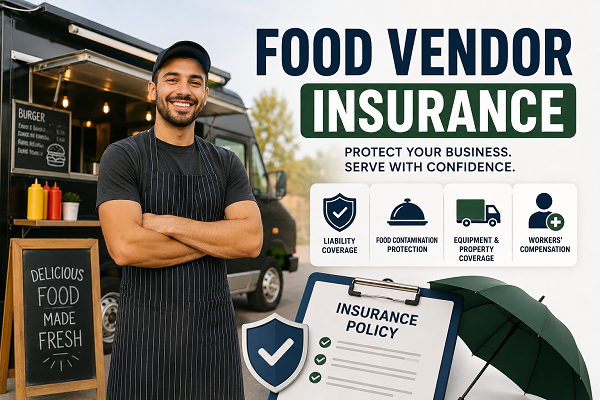
Running a food business in the United States can be exciting and profitable, but it also comes with serious risks. Whether you own a food truck, operate a booth at local festivals, sell snacks at farmers markets, or run a catering service, accidents and unexpected claims can happen anytime. That’s why having the right food vendor insurance is essential.
From customer injuries to food contamination claims, insurance helps protect your business finances, equipment, reputation, and future growth. In this complete guide, you’ll learn everything about food vendor liability insurance, coverage types, costs, requirements, and how to choose the best policy for your business.
What Is Food Vendor Insurance?
Food vendor insurance is a type of business insurance designed specifically for businesses that prepare, sell, or serve food. It protects food vendors against financial losses caused by accidents, injuries, property damage, lawsuits, and other business-related risks.
This insurance is commonly used by:
- Food truck owners
- Mobile food vendors
- Street food sellers
- Festival food booths
- Farmers market vendors
- Catering businesses
- Pop-up restaurants
- Ice cream and coffee carts
Most event organizers and markets in the USA require proof of insurance for food vendors before allowing businesses to operate.
Why Food Vendor Insurance Is Important
The food industry faces unique risks every day. Even a small mistake can lead to expensive legal claims or business interruptions.
Here’s why food vendor insurance matters:
Customer Injury Protection
If a customer slips near your booth or gets injured around your setup, medical expenses and lawsuits can become costly.
Food Poisoning Claims
A customer claiming foodborne illness can create major legal and financial problems for your business.
Property Damage Coverage
You may accidentally damage event property, rented kitchens, or nearby vendor equipment.
Event Requirement Compliance
Many festivals, fairs, and markets require vendors to carry food vendor liability insurance before participation.
Business Reputation Protection
Insurance helps businesses recover faster after unexpected incidents and maintain customer trust.
Types of Food Vendor Insurance Coverage
Different food businesses need different levels of protection. Here are the most important coverage options.
General Liability Insurance
This is the most common type of food vendor liability insurance. It covers:
- Customer injuries
- Slip-and-fall accidents
- Property damage claims
- Legal defense costs
General liability coverage is often the minimum requirement for events and food markets.
Product Liability Insurance
Product liability coverage protects your business if customers claim your food caused illness, allergic reactions, or contamination issues.
For food businesses, this coverage is extremely important because even one food poisoning allegation can become expensive.
Commercial Auto Insurance
If you operate a food truck or delivery vehicle, commercial auto insurance helps cover:
- Vehicle accidents
- Property damage
- Injuries
- Vehicle repair costs
This is especially important for businesses using mobile kitchens or delivery vans.
Workers’ Compensation Insurance
If you have employees, most states require workers’ compensation insurance. It helps cover:
- Employee medical bills
- Workplace injuries
- Lost wages
- Recovery expenses
Equipment Coverage
Food businesses rely heavily on expensive equipment like:
- Refrigerators
- Ovens
- Fryers
- Generators
- Food preparation tools
Equipment coverage helps protect against theft, fire, and accidental damage.
Business Interruption Insurance
Unexpected closures can stop your income completely. Business interruption insurance helps replace lost income if your business temporarily shuts down because of covered incidents.
Who Needs Food Vendor Insurance?
Almost every food-selling business should consider insurance protection.
Businesses that commonly need coverage include:
- Food trucks
- BBQ vendors
- Ice cream vendors
- Coffee carts
- Bakery stalls
- Hot dog vendors
- Catering companies
- Farmers market vendors
- Festival food sellers
- Mobile snack stands
Even small temporary vendors can benefit from mobile food vendor insurance because lawsuits and accidents can happen anywhere.
Food Vendor Insurance Requirements in the USA
Insurance requirements vary depending on the state, city, and event organizer.
Common requirements include:
- General liability coverage
- Proof of insurance certificate
- Commercial auto coverage for food trucks
- Workers’ compensation for employees
- Health permits and food licenses
Many festivals require at least $1 million in liability coverage before approving vendors.
Always check local regulations and event contracts carefully to understand food vendor insurance requirements in your area.
How Much Does Food Vendor Insurance Cost?
The cost of food vendor insurance depends on several factors.
Average Costs
Typical food vendor insurance costs in the USA may include:
- General liability: $25–$150 per month
- Food truck insurance: $150–$400 per month
- One-day event coverage: $50–$250 per event
Small vendors looking for cheap food vendor insurance may qualify for lower rates if they operate seasonally or attend limited events.
Factors That Affect Insurance Costs
Insurance companies usually consider:
- Business type
- Annual revenue
- Location
- Number of employees
- Type of food sold
- Claims history
- Equipment value
- Vehicle usage
Businesses with strong safety practices often receive lower premiums.
One Day Food Vendor Insurance
Some vendors only participate in temporary events or seasonal festivals. In these situations, one day food vendor insurance can be a smart and affordable option.
This short-term policy is commonly used for:
- Farmers markets
- Weekend fairs
- Food festivals
- School events
- Community gatherings
It provides temporary liability protection without requiring a long-term contract.
Food Truck Insurance vs Food Vendor Insurance
Many people think these policies are the same, but there are important differences.
Food Vendor Insurance
Usually focuses on:
- Liability protection
- Event coverage
- Temporary business operations
Food Truck Insurance
Includes:
- Vehicle coverage
- Commercial auto insurance
- Equipment protection
- Roadside risks
If you operate a mobile kitchen vehicle, you’ll likely need specialized food truck insurance instead of basic vendor coverage.
How To Choose the Best Food Vendor Insurance
Choosing the right policy can save your business from major financial problems later.
Here are important tips:
Compare Multiple Providers
Get quotes from several insurance companies before deciding.
Understand Policy Limits
Make sure coverage limits match your business risks.
Check Exclusions
Read what the policy does not cover.
Review Event Requirements
Different events may require different coverage amounts.
Look for Industry Experience
Choose insurers experienced with food businesses and mobile vendors.
Tips To Reduce Food Vendor Insurance Costs
You can lower insurance expenses without sacrificing important coverage.
Improve Food Safety
Maintain proper food handling and storage procedures.
Train Employees
Well-trained staff reduce accident risks.
Bundle Policies
Combining multiple insurance policies often lowers premiums.
Maintain a Clean Claims History
Fewer claims usually lead to better rates.
Use Safe Equipment
Regular equipment maintenance reduces fire and injury risks.
Common Mistakes Food Vendors Should Avoid
Many vendors make insurance mistakes that create major financial risks later.
Avoid these common problems:
- Buying only minimum coverage
- Ignoring product liability insurance
- Operating without event approval
- Failing to update policies after business growth
- Using personal auto insurance for food trucks
- Not understanding policy exclusions
Frequently Asked Questions
Is food vendor insurance legally required?
In many cases, yes. Event organizers, cities, and landlords often require proof of liability insurance before allowing vendors to operate.
Does food vendor insurance cover food poisoning claims?
Yes, product liability coverage may help cover foodborne illness and contamination claims.
Can I buy one day food vendor insurance?
Yes. Many insurance companies offer temporary coverage for short-term events and festivals.
How much liability insurance do food vendors need?
Many events require at least $1 million in liability coverage, but your needs may vary depending on business size and risk.
Is food truck insurance different from food vendor insurance?
Yes. Food truck insurance usually includes vehicle-related coverage in addition to general liability protection.
Conclusion
Running a food business in the United States of America is not easy. You need to have food and you need to treat your customers well.. Sometimes bad things can happen. Someone can get. You can get sued. This is why food vendor insurance is very important. It helps keep your business safe.
You might need insurance all the time or just for one day. Maybe you have a food truck. You need special insurance for that.. Maybe you are just selling food at a festival and you only need insurance for that day. You have to pick the insurance so you do not lose money or damage your reputation.
Before you buy insurance you should look at companies and see what they offer. You need to know what kind of insurance you need and you need to make sure you have all the papers. The city or the event might have rules that you have to follow. If you get the insurance now your food business can be successful and you can feel good about the future. Food vendor insurance is an investment, for your food business. It helps you grow your food business with confidence.