




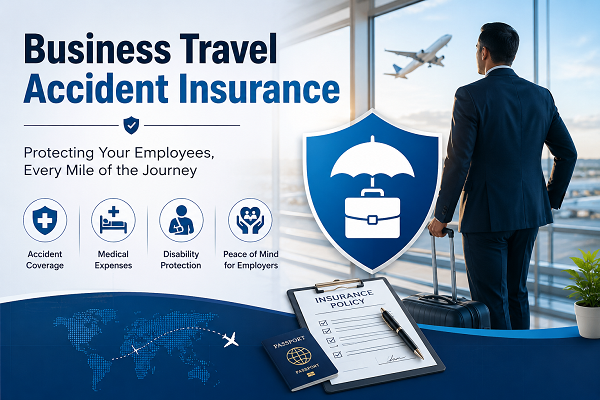
Business travel is a normal part of modern work life. Employees fly across states for meetings, attend conferences, visit clients, inspect projects, and represent their companies in different cities and countries every day.
Most businesses focus on travel bookings, hotel arrangements, and schedules. But very few stop to think about what could happen if something goes wrong during the trip.
What happens if an employee is injured in a car accident while traveling for work?
What if someone faces a medical emergency in another country?
Who handles the costs if a business traveler becomes permanently disabled after an accident?
These situations are more common than many companies realize. That’s why more businesses across the United States are investing in business travel accident insurance to protect employees and reduce financial risk during work-related travel.
At Vegansav, we believe employee safety should never be treated as an afterthought. A strong business travel insurance policy can protect both your workforce and your company when unexpected situations happen far from home.
Table of Contents
- What Is Business Travel Accident Insurance?
- Why Companies Need Employee Travel Protection
- What Does Business Travel Insurance Cover?
- What Is Usually Not Covered?
- Real-Life Example of Travel Accident Coverage
- Who Should Buy Business Travel Insurance?
- Business Travel Accident Insurance vs Travel Medical Insurance
- How Much Does Coverage Cost?
- Common Mistakes Businesses Make
- How to Choose the Right Policy
- How Claims Usually Work
- Frequently Asked Questions
- Final Thoughts
What Is Business Travel Accident Insurance?
Business travel accident insurance is a policy that protects employees against accidental injuries, disability, or death while traveling for work purposes.
In simple words, if an employee suffers a covered accident during an authorized business trip, the insurance policy may provide financial support for medical expenses, emergency transportation, disability benefits, or accidental death compensation.
You may also hear this coverage called:
- corporate travel accident insurance
- employee business travel insurance
- travel accident insurance for employees USA
- business trip accident coverage
Unlike personal vacation insurance, this type of coverage is specifically designed for work-related travel risks.
Many companies now include a business travel insurance policy as part of their employee benefits and corporate duty-of-care strategy.
Why Companies Are Taking Business Travel Risks More Seriously
Over the last few years, businesses have become much more aware of employee travel risks.
According to several corporate travel risk studies, medical emergencies, transportation accidents, and international travel disruptions remain some of the biggest concerns for employers with traveling staff.
A single emergency abroad can cost thousands — sometimes even tens of thousands — of dollars.
For example:
- Emergency medical evacuations can become extremely expensive
- Overseas hospitalization costs may be much higher than expected
- Travel-related injuries can lead to lost productivity and legal complications
- Employees may face emotional and financial stress during emergencies
This is why many organizations now view employee travel protection as part of responsible business management, not just an optional benefit.
What Happens If an Employee Gets Injured During a Work Trip?
Imagine this situation.
A company employee travels from California to New York for a client presentation. After leaving the airport, the employee is involved in a serious car accident and requires emergency surgery.
Suddenly, the company is dealing with:
- emergency medical costs
- hospital coordination
- employee recovery support
- possible legal issues
- travel disruptions
- financial uncertainty
Without proper insurance coverage, situations like this can become stressful very quickly.
With a strong business travel accident insurance policy in place, many of these expenses and emergency services may already be covered.
That peace of mind matters for both employers and employees.
What Does Business Travel Accident Insurance Cover?
Coverage depends on the insurer and policy type, but most plans include several important protections.
Accidental Death Benefits
One of the most valuable features is accidental death insurance for business travel.
If an employee dies because of a covered accident during a work trip, the policy may provide financial compensation to the employee’s beneficiaries.
This support may help families handle:
- funeral expenses
- household bills
- education costs
- ongoing financial obligations
For employers, offering this protection shows genuine concern for employee well-being.
Permanent Disability Coverage
Some travel accidents can permanently affect a person’s ability to work and live normally.
Many policies include compensation for:
- loss of vision
- hearing loss
- limb loss
- permanent mobility issues
- long-term disability
These benefits can help reduce financial pressure during recovery.
Emergency Medical Expenses
Medical emergencies while traveling can become expensive very quickly, especially outside the employee’s home state or country.
Many business travel insurance policies may help cover:
- hospital stays
- ambulance transportation
- emergency surgery
- doctor consultations
- prescription medications
International business travelers often benefit the most from this protection.
Emergency Evacuation Services
This is one area many businesses underestimate until a real emergency happens.
If an employee becomes seriously injured in another country, medical evacuation alone can cost tens of thousands of dollars.
Some policies include:
- air ambulance transportation
- emergency evacuation flights
- transportation to qualified hospitals
- repatriation assistance
These services can be critical during serious emergencies abroad.
Trip Interruption Protection
Business trips don’t always go according to plan.
Covered emergencies may force employees to:
- extend hotel stays
- rebook flights
- change transportation arrangements
- cancel meetings unexpectedly
Some policies may reimburse certain travel-related expenses caused by covered incidents.
What Is Usually NOT Covered?
This is the section many businesses ignore — and later regret ignoring.
Even strong insurance policies have exclusions.
Most business travel accident insurance plans generally do not cover:
- pre-existing medical conditions
- personal vacation activities unrelated to work
- alcohol or drug-related incidents
- dangerous extreme sports
- illegal activities
- intentional self-harm
- certain war or terrorism situations
This is why businesses should always review policy details carefully before purchasing coverage.
The cheapest policy is not always the safest option.
Who Should Buy Business Travel Accident Insurance?
Many people assume only large corporations need travel protection. That’s not true.
Businesses of all sizes can benefit from employee travel coverage.
Small Businesses
Small companies often have limited financial flexibility.
One serious travel-related emergency can create major financial stress.
Large Corporations
Companies with employees traveling frequently across states or internationally usually face greater travel-related exposure.
Corporate travel accident insurance helps manage that risk more effectively.
Remote & Hybrid Teams
Today’s workforce is changing.
Even remote employees now travel for:
- conferences
- company events
- training programs
- client meetings
Employee business travel insurance helps protect modern distributed teams.
Sales Teams & Executives
Employees who spend significant time traveling for business naturally face higher travel risks.
International Business Travelers
International trips can involve unfamiliar healthcare systems, language barriers, and emergency response challenges.
Having proper workplace travel protection becomes even more important in those situations.
Business Travel Accident Insurance vs Travel Medical Insurance
Many business owners confuse these two coverages.
While they sound similar, they serve different purposes.
| Feature | Business Travel Accident Insurance | Travel Medical Insurance |
|---|---|---|
| Main Focus | Accident-related protection | Medical treatment coverage |
| Employer-Oriented | Yes | Sometimes |
| Disability Benefits | Usually included | Limited |
| Accidental Death Benefits | Included | Rare |
| Emergency Evacuation | Often included | Usually included |
| Best For | Employee work trips | General travel health needs |
Some businesses choose both policies for broader protection.
How Much Does Business Travel Accident Insurance Cost?
There’s no single price because every company has different travel risks.
Several factors affect policy pricing.
Number of Employees
Larger workforces generally increase premium costs.
Travel Frequency
Employees who travel weekly usually create more risk exposure than occasional travelers.
Domestic vs International Travel
International business travel often increases costs because overseas medical treatment and evacuation services are more expensive.
Industry Type
Higher-risk industries like manufacturing, engineering, and construction may pay more for coverage.
Coverage Limits
Policies with larger benefits and broader protection naturally cost more.
Common Mistakes Businesses Make When Buying Coverage
Many companies rush through the insurance buying process and overlook important details.
Here are some common mistakes.
Choosing the Cheapest Policy
Low-cost policies sometimes come with strict limitations or weak coverage.
Saving money upfront can become expensive later.
Ignoring International Coverage
Some businesses assume domestic coverage automatically applies overseas.
That’s not always true.
Not Reading Exclusions Carefully
Many claim problems happen because businesses didn’t fully understand policy limitations.
Failing to Update Coverage
As companies grow, employee travel habits change.
Insurance policies should evolve too.
How to Choose the Right Business Travel Insurance Policy
Before selecting a provider, businesses should compare more than just pricing.
Review Coverage Limits Carefully
Make sure accidental death and disability benefits are appropriate for your workforce.
Check Emergency Assistance Services
24/7 emergency assistance can make a huge difference during international incidents.
Evaluate the Claims Process
Fast, responsive claims handling matters during stressful situations.
Understand Global Coverage Areas
If employees travel internationally, confirm the policy includes overseas protection and emergency evacuation support.
Compare Insurer Reputation
A reliable insurance company with strong customer support is often worth paying slightly more for.
Why Employees Appreciate This Coverage
Most employees never think about insurance while booking a work trip.
But they definitely think about it during emergencies.
Knowing the company provides business travel protection helps employees feel:
- safer
- more supported
- more confident while traveling
It also improves trust between employers and employees.
When businesses invest in employee safety, workers notice.
How Business Travel Accident Insurance Claims Usually Work
Every insurer has its own process, but claims often follow similar steps.
Step 1: Report the Incident
The employee or employer should notify the insurance provider as soon as possible.
Step 2: Collect Documentation
This may include:
- medical reports
- travel documents
- police reports
- hospital bills
- expense receipts
Step 3: Submit Claim Forms
Accurate documentation helps avoid delays.
Step 4: Follow Up With the Insurer
Claims processing times vary depending on the situation and insurer requirements.
About the Author
This article was created by the insurance content team at Vegansav, focusing on employee protection, commercial insurance solutions, and business travel risk management in the United States.
Final Thoughts
Business travel helps companies grow, build partnerships, and create new opportunities. But every work trip also comes with risks that businesses should not ignore.
A strong business travel accident insurance policy helps companies protect employees, reduce financial uncertainty, and respond more effectively when emergencies happen away from home.
More importantly, it shows employees that their safety matters beyond the office.
Before your team books its next business trip, make sure your company has the right protection in place. Comparing policies carefully today can prevent major financial and legal problems tomorrow.